
From the company
Behind Portrait Song: The Story of Phil Firetog
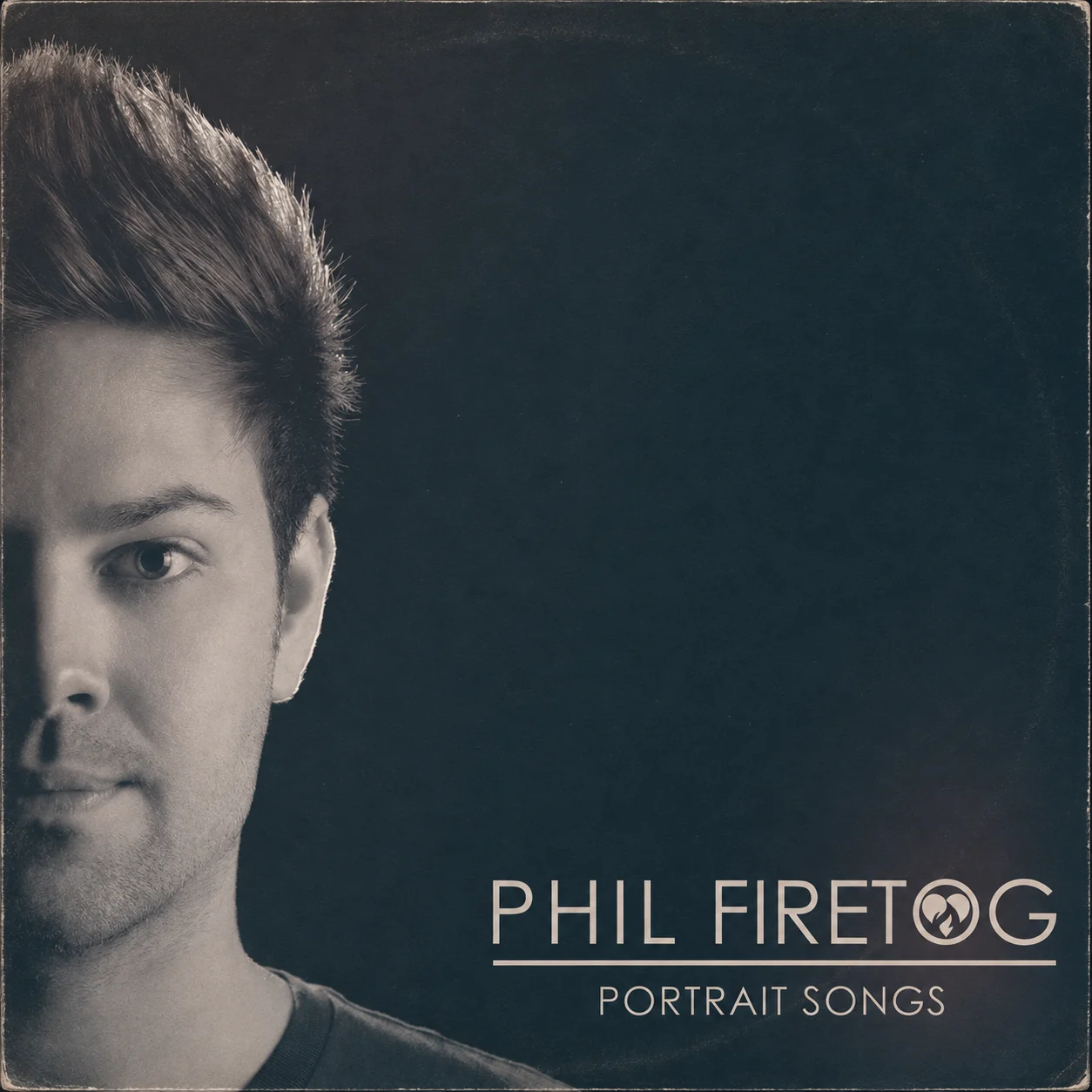
When Phil Firetog released Portrait Songs in May 2015, its opening track was a song that had already been part of his life for nearly a decade.
“Portrait Song” was one of the first original songs he had ever written to completion.
Its beginnings weren’t in a recording studio or rehearsal room, but in his childhood bedroom, with an acoustic guitar and a charcoal drawing hanging on the wall.
At the time, Phil was navigating the aftermath of a relationship. His bedroom walls were covered with artwork he’d created himself: paintings, sketches, and charcoal drawings. At the center was a portrait of the woman he’d recently been seeing.
One day, while strumming his guitar and looking at that portrait, the words began to take shape.
He wasn’t simply writing about someone who was no longer there. He was singing directly to an image of her.
And in that moment, the portrait became something more than a drawing.
The Person and the Portrait
There’s a peculiar contradiction in drawing someone you love.
You spend hours studying their face, capturing every detail, trying to preserve something about them.
Yet the finished picture can only ever represent what you see.
For Phil, that distinction became the heart of “Portrait Song.”
As the relationship deteriorated, he began to feel that the person he’d known was becoming emotionally distant.
Beauty, appearances, and the image she presented to the world seemed increasingly disconnected from the person beneath them.
The charcoal portrait reflected that feeling.
It was beautiful, recognizable, and familiar, but it couldn’t reveal what she was thinking or feeling.
The song explores the distance between someone’s outward appearance and their emotional reality.
When Phil sings about the way someone drew herself to him, the metaphor works in two directions.
He had physically drawn her portrait, but the relationship had also been shaped by the version of herself she had presented.
The drawing became a representation of both.
The Difference Between Looking Alive and Being Alive
One of the song’s recurring ideas is the contrast between the portrait’s lifelike appearance and Phil’s own emotional awakening.
In the recorded version, he sings, “I feel so alive.”
During live performances, however, he sometimes changes that line to “you look so alive.”
It’s a subtle difference that completely shifts the perspective.
One version speaks to the freedom of moving beyond a painful relationship.
The other acknowledges how convincingly a portrait can preserve the appearance of someone who is no longer part of your life.
The drawing looks alive, but Phil is the one actually living, changing, and moving forward.
That distinction was part of what he was discovering as he wrote.
Learning to Be Vulnerable
“Portrait Song” was written by a young songwriter who wasn’t entirely comfortable sharing his most personal emotions.
Even the opening lyrics once felt difficult for Phil to perform.
They exposed a vulnerability he wasn’t accustomed to expressing publicly.
In many ways, that experience reflected the purpose of the entire Portrait Songs record.
Before making the album, Phil had contributed to original music in other bands, writing bass parts and helping develop songs.
But this collection represented something different: taking his own ideas, completing them, and allowing other people to hear them.
The album became his introduction as a songwriter.
It also became a way to connect with musicians who wanted to help bring that music to life.
Those connections eventually led to the formation of the Phil Firetog Trio, where collaboration gave the songs new dimensions and helped Phil become increasingly comfortable performing his own material.
In the studio, producer Mike Watts played an important role in building that confidence, helping Phil feel comfortable with his songwriting and performances.
A Song as a Form of Time Travel
Nearly twenty years after writing “Portrait Song,” Phil’s relationship with the music has changed, even if its original meaning hasn’t.
What once felt like an open wound now feels more like opening an old journal.
The emotions are still there, but the person revisiting them isn’t the same person who first experienced them.
For Phil, songwriting has become a form of time travel.
Every song preserves something about the person he was when he wrote it.
Performing those songs offers an opportunity to revisit those experiences from a different place in life.
It’s less about reliving the pain and more about recognizing how much has changed since then.
And somewhere in his childhood home, the original charcoal portrait still exists, packed away in a box.
The drawing may be buried, but the song continues to give that memory a voice.
Perhaps the most meaningful part of “Portrait Song” today is that listeners don’t need to know the woman in the drawing or understand the exact circumstances that inspired it.
Phil doesn’t particularly want everyone to experience the song exactly as he did.
He hopes they’ll discover something of their own within it.
Maybe they’ll remember someone they once knew. Maybe they’ll recognize a feeling they haven’t revisited in years.
Or perhaps the song will mean something entirely different to them.
That’s the beauty of allowing a deeply personal experience to become a piece of music.
The portrait captured one person’s image at one moment in time.
The song gave that moment somewhere to live beyond the wall.
Open “Portrait Song” in Spotify .