
From the company
Cruel: The Pain of Being Unseen
There’s a particular kind of loneliness that comes from feeling invisible to someone who’s supposed to know you better than almost anyone else.
It’s one thing to feel misunderstood by the world.
It’s another to feel misunderstood by someone who’s been let into the most personal parts of your life, who knows your habits, your insecurities, your ambitions, the whole shape of your identity, and still doesn’t see you.
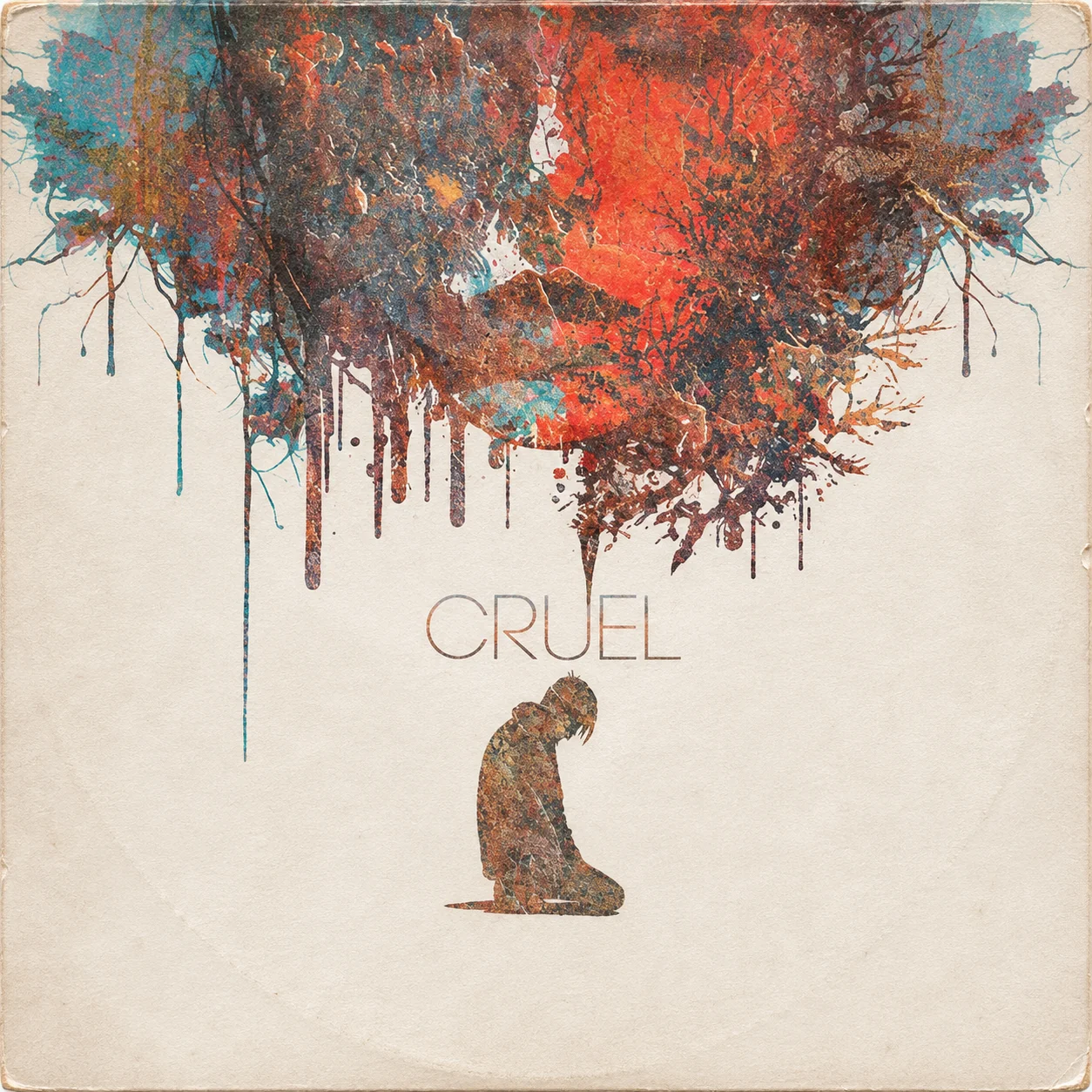
That’s where “Cruel” comes from.
It’s about emotional neglect, unhealthy relationships, identity, and the masks we wear.
It came out in 2023, but the feelings were there long before that.
When Love Asks You to Become Someone Else
At the time, I was trying to figure out what my future looked like.
Music wasn’t a hobby.
It was, and is, the center of who I am.
And when someone close to you imagines a future that doesn’t really include that, it can feel like you’re being asked to become someone else.
At one point, I was willing to give up far more of myself than I ever should have.
Looking back, that’s hard to imagine.
Because music has always been there for me.
But when you’re emotionally invested in someone, you can convince yourself that making it work requires sacrifices you’d never otherwise consider.
“Cruel” isn’t about one villain and one victim.
It’s about what happens when two people become so focused on their own expectations and their own fears that they stop recognizing the person in front of them.
The Difference Between Healing and Numbness
I’ve always enjoyed writing lyrics that can hold more than one truth at once.
The opening thought about no longer being angry can sound like healing.
Or it can mean you’ve numbed yourself enough to stop feeling.
For me, that line was tied to trying to dull pain, to convince myself I had things under control.
But there’s a difference between processing something and finding ways not to feel it.
Sometimes what looks like healing is actually numbness.
Sometimes what looks like confidence is someone trying to conceal how much they’re hurting.
And sometimes you tell yourself you’re over something because that’s easier than confronting how deeply it affected you.
That ambiguity matters to me.
I don’t want a lyric to have only one emotional interpretation if the truth was more complicated.
How I feel when I sing something can change.
The words remain the same, but the perspective shifts.
Why Don’t You See Me?
The central question of “Cruel” isn’t just about attention.
It’s about wanting to be recognized as a complete person.
Being seen doesn’t mean someone agrees with every choice you make.
It means they recognize that your dreams, fears, and passions are real, even when they don’t share them.
I wanted to be seen as a musician and an artist.
As someone who needed to create.
As someone whose future wasn’t necessarily going to fit into somebody else’s conventional idea of what adulthood should look like.
But I also recognize that the person I was with had her own expectations.
She had her own needs and her own understanding of what a shared future should look like.
And I wasn’t necessarily giving her the life she wanted, either.
That’s part of why the relationship became so unhealthy.
We were trying to force two different visions of the future to coexist.
And neither of us was getting what we needed.
The Portrait We Present
There was also the idea of appearances.
People presenting themselves as confident, successful, or perfectly happy while privately struggling.
There’s imagery in the song about putting on a show and admiration for a portrait that doesn’t necessarily reflect the person underneath.
I like that because a portrait can be beautiful and convincing without containing the whole person.
Sometimes relationships work the same way.
We fall in love with our idea of someone and stop noticing when it no longer matches reality.
We become attached to the version of another person we want to see.
And sometimes we become attached to the version of ourselves that we think the relationship requires.
Both can be incredibly damaging.
Cruelty and Weakness
I don’t think cruelty always comes from strength.
Sometimes it comes from weakness.
Insecurity.
Fear.
Not knowing how to say what you’re feeling.
In unhealthy relationships, people protect themselves by attacking, dismissing, or insisting their version is the only one that counts.
And eventually, those behaviors become patterns.
Arguments become familiar.
Resentments become expected.
The relationship starts revolving around who’s right and who’s wrong instead of whether anyone is actually happy.
There’s a line in the song that plays with the idea of having the same argument on repeat.
One person is right.
The other is wrong.
And that becomes the theme song.
I liked that musical reference because it suggests something looping, something you can’t turn off.
As “Cruel” develops, the emotion becomes more confrontational.
It moves from describing pain to refusing to stay unnoticed.
That shift mattered to me.
It was a reminder that I didn’t want to keep sacrificing my identity in the hope that it would make everything work.
A Story That Was Already There
The song itself came together fairly quickly because the emotional foundation was already there.
I wasn’t inventing a story.
I was documenting something I already understood.
The double meanings weren’t tricks.
They were memories of how it felt from different angles.
The relationship that inspired it happened in my mid-to-late twenties.
Later, when I turned thirty, Portrait Songs became a way of finishing songs I’d been carrying for years.
“Cruel” wasn’t finished in time for that album.
It was still something I needed to complete.
When it finally came out as a single in 2023, it was one more piece of that history finding its place.
I didn’t write it to convince myself to keep pursuing music.
I’d already decided that music mattered to me.
The story was there.
It simply needed to be told.
Looking Back
Performing “Cruel” now doesn’t feel like victory.
It still reminds me of the hurt.
And that’s okay.
Not every song has to become an anthem of overcoming.
Sometimes the purpose of a song is simply to tell the truth.
To give a feeling a place to exist.
I can look back and recognize that we weren’t right for each other.
That we wanted different things.
And I don’t need a villain to justify the pain.
But I also don’t want to pretend it didn’t hurt to feel misunderstood.
If there’s one thing I’d hope people take from “Cruel,” it’s that love shouldn’t require you to erase yourself.
Being seen matters as much as being loved.
That’s what stayed with me.
I didn’t have to stop being an artist.
I didn’t have to become somebody else to prove I was capable of loving someone.