
From the company
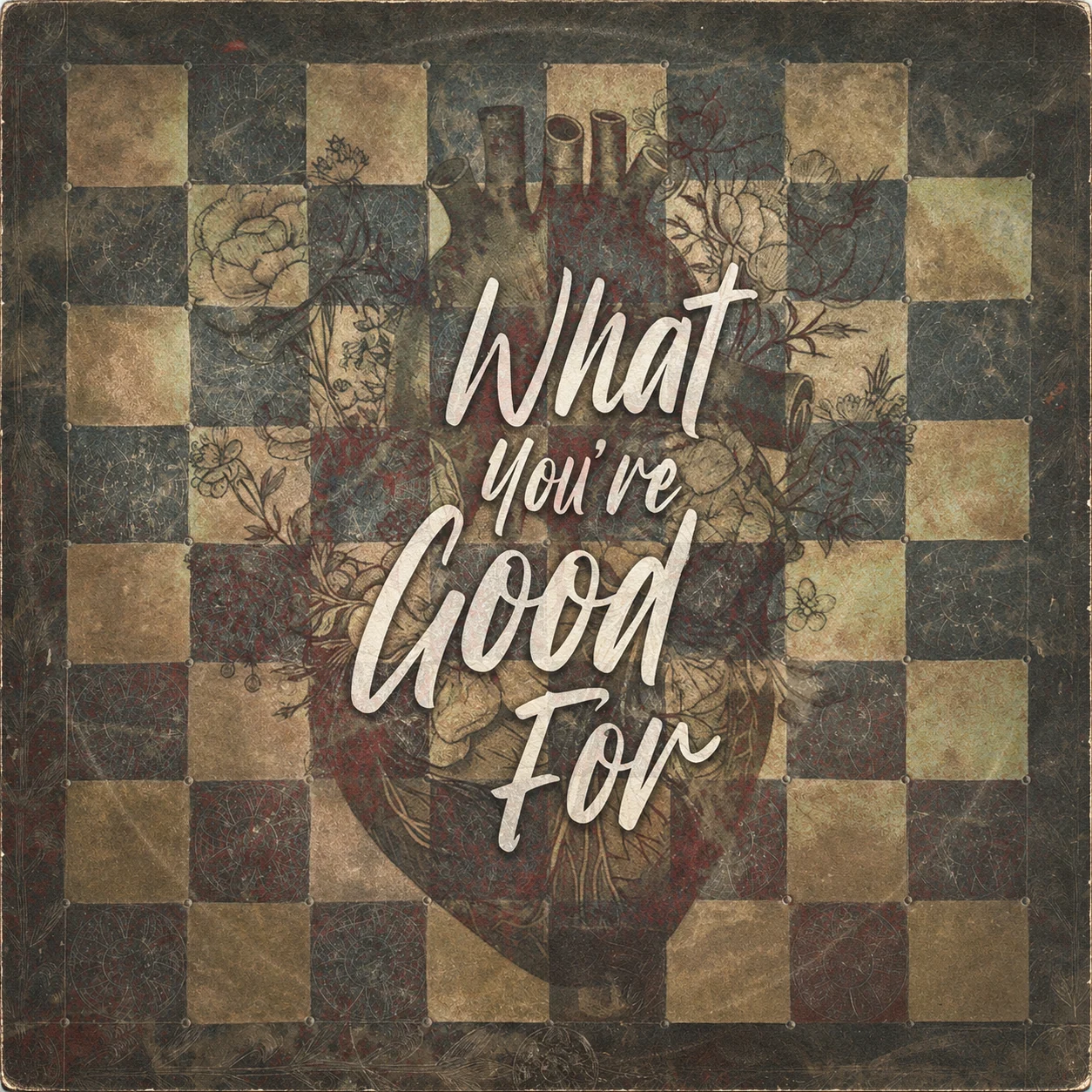
What You're Good For: A Middle Finger With a Smile
I’ve been told that I have a particular talent for saying absolutely terrible things to people with a smile on my face and somehow getting away with it.
I don’t know if that’s necessarily a compliment, but it does explain a lot about “What You’re Good For.”
Because that’s exactly what this song is.
It’s a big fuck you, delivered with a smile.
I wanted it to feel fun, upbeat, infectious.
Something you could move to, enjoy even.
But the lyrics aren’t nice at all.
There’s a deliberate contradiction there: happy music, anything but happy words.
An Understanding That Changed
It came out of a relationship that probably shouldn’t have been called a relationship in the first place.
It was one of those situations where there was attraction, chemistry, familiarity, and an understanding, at least on my side, that it wasn’t supposed to turn serious.
We enjoyed certain things about each other, but that didn’t mean we were compatible.
At some point, expectations shifted.
Suddenly something that had worked within certain boundaries became an argument.
The physical connection was there.
The emotional compatibility wasn’t.
And I knew that.
I didn’t see a future in the relationship.
That didn’t mean I couldn’t enjoy the connection we had.
It meant I understood the difference between physical attraction and wanting to build an entire life with somebody.
Those are two very different things.
And sometimes we get ourselves into trouble when we pretend otherwise.
Hell, I’m No Angel
That acknowledgment matters to me.
Because I’m not pretending I was innocent.
I stayed in the cycle, too.
We were using each other.
Maybe not in exactly the same ways, but we both kept coming back because it was intoxicating.
There’s a line about games.
At first, the narrator points at the other person’s behavior.
Then he admits that he’s playing those games, too.
Because that was the truth.
Even when I complained about what was happening, there were moments when I enjoyed the game.
I knew what the arrangement was.
I knew what I wanted from it.
And I was still participating.
I didn’t want to write a song that pretended one person had been completely innocent while the other was responsible for everything.
That wouldn’t have been particularly honest.
The sarcasm works better when the narrator understands that he’s part of the problem.
You Wanted Your Song
One of my favorite parts of the entire concept is the irony of someone wanting a song written about them.
She knew I wrote songs about other women.
She knew relationships and personal experiences had inspired a lot of my music.
And she wanted to be important enough to have her own song.
I think, to her, that represented something.
Being the subject of a song meant being special.
It meant being significant enough in my life that I’d turn our relationship into music.
And there’s something almost amusing about that expectation.
Because now she has a song.
Just not the one she probably imagined.
Instead of a romantic tribute, she got a sarcastic commentary on the relationship.
That was intentional.
There’s something satisfying about giving someone exactly what they asked for in a form they didn’t expect.
It’s a little cruel, perhaps.
But that’s also part of the humor.
Smiling Through the Insult
Musically, I built “What You’re Good For” the way I often write.
The music came first.
Then I began finding the words that fit the feeling of the arrangement.
I didn’t want it to sound bitter.
I didn’t want it to feel like another emotionally devastated breakup song.
I wanted it to sound happy.
Playful.
Infectious.
Almost as though you could be listening to somebody having a wonderful time.
And then you pay attention to the lyrics and realize he’s telling someone off.
I like that contradiction.
It’s the musical equivalent of smiling while delivering a completely unapologetic insult.
I’ve been told I have a knack for doing that in conversation.
Apparently, it carried over into my songwriting.
The Difference Between Desire and Compatibility
The underlying idea is something I think people often struggle to recognize.
You can be physically attracted to someone without wanting a relationship with them.
You can enjoy their company in one context while knowing that a larger commitment would be a terrible decision.
That doesn’t necessarily mean the attraction is false.
It means attraction isn’t the whole picture.
Who someone is, what they want from life, how they treat people, and whether you’re compatible as partners all matter.
There are qualities I might appreciate in someone I spend time with casually that aren’t enough to make me want a serious relationship.
And sometimes the healthiest decision is recognizing that distinction.
The problem comes when the two people involved stop wanting the same thing.
One person wants to change the arrangement.
The other doesn’t.
And suddenly the thing that brought you together starts creating resentment.
The Joke After the Relationship
I wrote the song after the situation had ended.
I wasn’t in the middle of some emotional explosion.
It was a cooler reflection.
A sarcastic poke.
A little jab.
I knew what I wanted to say, and I wanted to have fun saying it.
That’s an important distinction.
Some of my songs still bring back difficult emotions when I perform them.
“What You’re Good For” doesn’t.
There’s no lingering heartbreak I need to revisit.
I can look back and recognize the situation for what it was without pretending it was something more.
I don’t necessarily need to be angry about it.
I can laugh at it.
And I can enjoy the song.
A Middle Finger With a Smile
I like that “What You’re Good For” has such an upbeat personality.
It’s a fun song with some nasty lines.
It’s sarcastic, a little arrogant, a little inappropriate, and self-aware about all of those things.
It doesn’t need to apologize for being that way.
I think the contradiction is what makes it work.
People can enjoy the music without necessarily expecting the message to be so sharp.
And once they understand what I’m saying, they can appreciate the joke.
At its heart, the song is about the difference between wanting someone and wanting a future with them.
Those things aren’t interchangeable.
And when somebody expects a romantic tribute from a songwriter with a sarcastic streak, there’s always the possibility they might get something very different.
You wanted your song.
Well, now you’ve got it.
How’s that feel?