
From the company
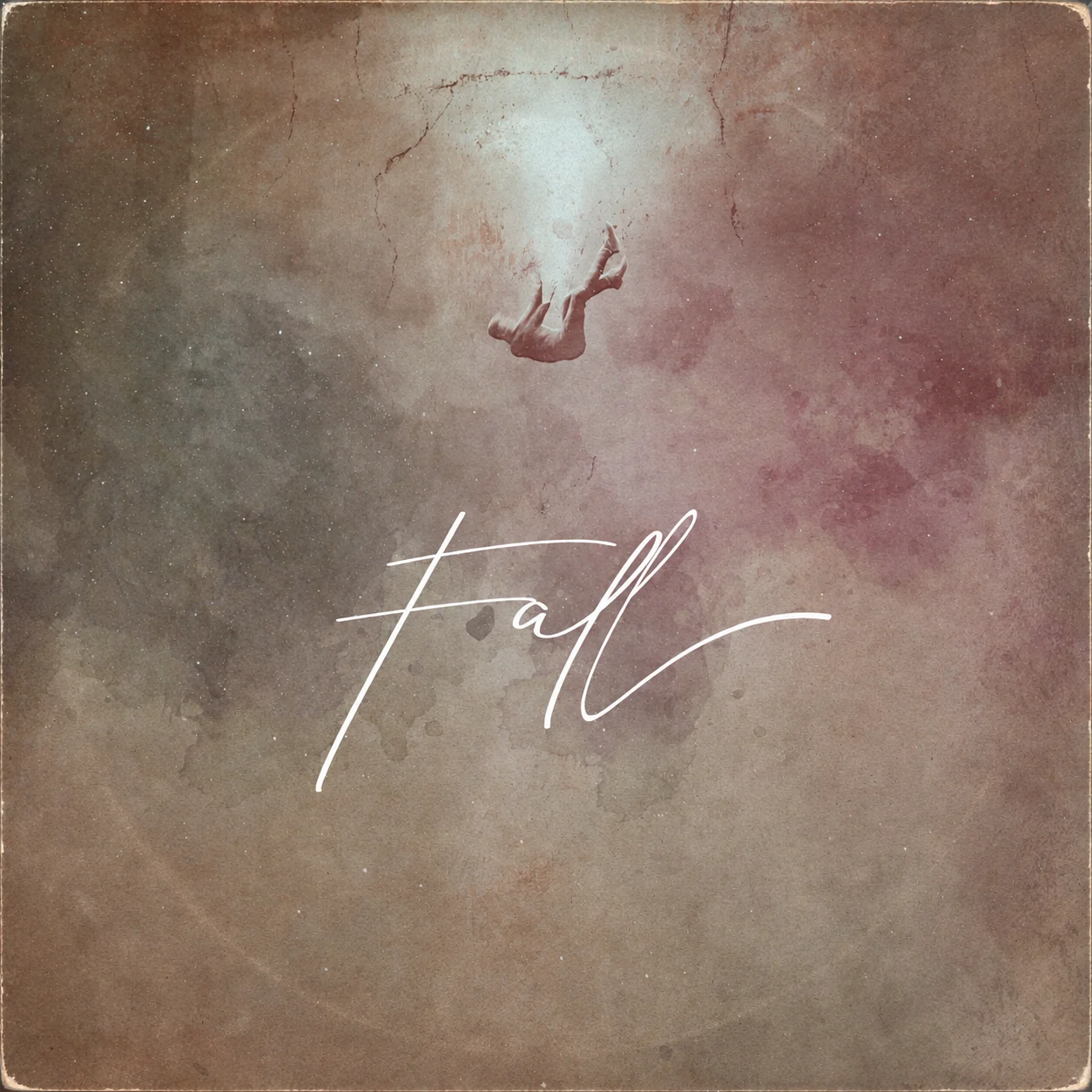
Fall: Learning to Let Myself Fall
Finding the Song Through the Guitar
“Fall” started with a guitar tuning.
I was experimenting with something far removed from the standard E-flat tuning I usually played. From the lowest string to the highest, I had the guitar tuned to B, F♯, C♯, F♯, G♯, C♯.
It opened up a different way of playing.
I found melodies I really liked, but I didn’t know what the song was supposed to be about.
Then a line came out almost by itself:
“Lift me up, love. Don’t ever let me fall.”
I wasn’t sitting down to write about a particular person. I was following the melody, and those words fit it naturally.
But once I had them, I started asking myself what they meant.
Why would someone ask love to lift them up, but also beg not to fall?
That contradiction became the heart of the song.
Opening the Door Again
At the time, I’d spent roughly ten years without a serious relationship.
I’d been single, dating, and living without committing myself to that kind of connection.
Eventually, though, I started to feel myself opening up to the possibility of a relationship again.
That didn’t mean I had someone specific in mind.
It meant I was beginning to take down the walls I’d built around the idea of love.
And that was exciting, but it was frightening, too.
When you’ve kept that part of yourself guarded for so long, letting someone in can feel less like taking a step and more like stepping off a ledge.
I wanted “Fall” to explore that moment before you take the leap.
The song keeps returning to images of falling, diving, shattering, and struggling for air.
They’re different ways of describing the same fear:
What happens if I let myself feel everything again, and it overwhelms me?
Down the Rabbit Hole
I liked the idea of falling into a wonderland, tumbling down a rabbit hole.
Alice in Wonderland gave me a way to describe love as an unfamiliar place where the usual rules no longer apply.
It can be beautiful and whimsical, but also disorienting.
You don’t know where you’ll land.
And once you’re in it, you might not know how to get back out.
There’s a line about diving all in and not knowing how long I can hold my breath.
For me, that captures the overwhelming side of the feeling.
You’re drawn toward something you want, even though you’re not sure you can handle its intensity.
Is It Better Than Nothing?
Another line arrived just as naturally as the first.
I reached a particular part of the guitar melody, and the words simply followed its rhythm:
“Just tell me something. Is it better than nothing?”
I didn’t have to fight for that lyric.
It came out almost like the melody already knew what it wanted to say.
Then I had to figure out how the pieces fit together.
Once I understood the question, the rest came together pretty smoothly, like fitting pieces into a puzzle.
And it’s probably one of my favorite parts of the song.
Is it better to risk loving someone than to avoid love altogether?
Is the possibility of getting hurt worth the possibility of feeling something extraordinary?
There isn’t a simple answer.
That’s the point.
The song isn’t about having conquered the fear.
It’s about recognizing the fear and considering the leap anyway.
A Different Kind of Guitar Playing
Musically, “Fall” has always felt like its own little world.
The unusual tuning pushed me toward guitar parts I probably wouldn’t have written otherwise.
I hear a maturity in that playing when I listen back.
It came from a period when I was spending a lot of time with the guitar, and I feel I was playing at a particularly high level.
The arrangement also took on a whimsical quality.
There was a flute part, and the whole song developed a fullness that suited its almost fairy-tale atmosphere.
That’s part of why we don’t play it live very often.
Retuning a guitar for one song is a practical challenge, and we don’t always have the players available to recreate everything in the recording.
But the song has connected with people in the band.
My drummer, Johnny Potts, has told me that “Fall” is one of his favorite songs.
It’s interesting hearing how strongly another musician connects with something that isn’t necessarily one of my personal favorites.
I enjoy it, and I like revisiting it.
I especially appreciate the guitar playing and the musical ideas.
Sometimes a song can matter to you for what you were exploring as a musician, even if it isn’t the first one you’d choose to perform.
Learning to Let Go
Looking back, I think the most important thing about “Fall” is that it captures a change in my willingness to be vulnerable.
After years of not seeking a serious relationship, I was beginning to consider what it would mean to let love into my life again.
I wasn’t writing about a love story that had already happened.
I was writing about the possibility of one.
The fear was real, but so was the curiosity.
And maybe that’s what the opening line has been asking all along.
Can love lift you up without making you fall?
Probably not.
Maybe opening yourself up means accepting that you can’t have one without risking the other.
“Fall” lives in that uncertainty, right at the edge of letting go.